
Hard Water in Well Water: White Scale, Spotty Dishes, and How to Soften It
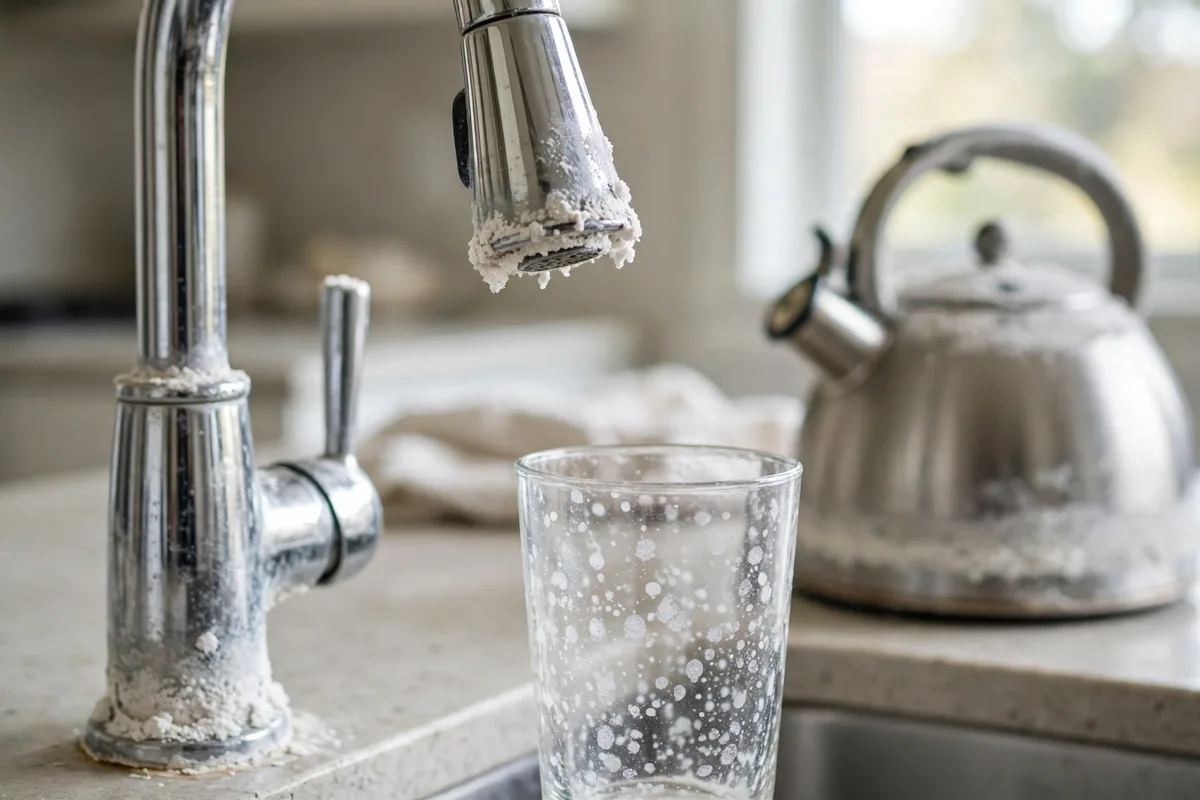
The kettle tells you first
The kettle is where hard water introduces itself. A white crust forms on the element, flakes off into the water, and comes back within weeks of every vinegar descale. Then you start seeing the same mineral elsewhere: a chalky ring around the faucet base, white spots on glasses that no dishwasher cycle removes, a gray film on the shower door, laundry that feels stiff no matter how it is washed. None of it is dirt. All of it is your water, leaving a little of itself behind every time it dries or gets hot.
Hard water is the quietest of the well-water problems — no smell, no color, nothing alarming in the glass — and the only one whose main target is not you. It is your equipment. This guide covers what hardness actually is, the number that decides whether to treat it, how a water softener works, the sizing math, and the one rule this site repeats for every problem: the softener goes last, after the water's other problems have been dealt with.
What hardness is, and where your well gets it
Hardness is dissolved calcium and magnesium. Nothing more exotic than that. As the US Geological Survey explains it, water is an excellent solvent: as groundwater moves through soil and rock, it dissolves small amounts of naturally occurring minerals and carries them along. A private well drilled into mineral-bearing ground delivers those minerals to your taps. Hard water is not contamination and not a failure of the well; it is geology, dissolved.
The USGS classifies hardness, measured as calcium carbonate, like this:
| Class | mg/L | Grains per gallon (gpg) |
|---|---|---|
| Soft | 0–60 | 0–3.5 |
| Moderately hard | 61–120 | 3.5–7 |
| Hard | 121–180 | 7–10.5 |
| Very hard | Above 180 | Above 10.5 |
Labs report hardness in milligrams per liter; softener makers rate their equipment in grains per gallon. The conversion is one division: 1 gpg = 17.1 mg/L, so a lab result of 205 mg/L is 12 gpg in softener language. Both numbers describe the same water — but the softener's size, settings, and price are all discussed in grains, which is why the conversion matters before you shop. If you have not tested yet, start there: hardness is one line on the standard report, and our guide to reading your well water test numbers walks through the whole page.
Why scale forms exactly where it costs you
Calcium and magnesium stay politely dissolved in cold water. Heat changes the arrangement. When hard water is heated, solid calcium carbonate deposits form — and the USGS lists what that scale does inside a home: it can reduce the life of equipment, raise the cost of heating the water, lower the efficiency of electric water heaters, and clog pipes. The water heater is the expensive victim. It is the one appliance that heats your water all day, every day, so it collects the most scale, works harder through its own mineral insulation, and dies younger than it should.
The everyday signs are the same chemistry at lower stakes. Soap reacts with the calcium in hard water to form soap scum — the film on your hands, the ring in the tub, the curds that dull laundry. Glasses come out of the dishwasher spotted and cloudy because the droplets that dried on them left their minerals behind. A showerhead slowly chokes as its nozzles narrow. None of these is dangerous. Together they are a tax on soap, on appliances, and on the water heater's lifespan — which is the honest frame for the whole topic: hard water is an equipment problem and a comfort problem, not a safety problem.
Is hard water bad for you? The short, sourced answer
There is no health-based standard for hardness, and no regulator requires you to soften. The Minnesota Department of Health puts it plainly: there is no requirement to soften your water, and the decision is a personal choice. The minerals themselves are not the enemy — calcium and magnesium are essential elements, and the World Health Organization notes, via the USGS, that drinking water can contribute both to the diet. If a salesperson presents hardness as a health hazard, they have left the evidence behind.
The same health department does give a practical line for when softening is worth considering: if your water's hardness is greater than 7 grains per gallon or 120 mg/L — the top of the USGS "moderately hard" band — you might need a softener to keep appliances running well and to improve how the water looks, feels, and tastes in use. Below that line, most households live with their water as it is. Above it, the scale tax compounds every year. Your number, not a sales visit, tells you which side you are on.
How a water softener actually works
Nearly every true softener is an ion exchange unit, and the mechanism is a swap. The Minnesota Department of Health describes it directly: resin beads inside the softener trap the calcium and magnesium in the water and exchange them for sodium or potassium. Water flows in hard and out soft because its hardness minerals are sitting on the resin, replaced by sodium ions that do not form scale, do not react with soap, and do not spot glass.
The resin's capacity is finite, so the softener periodically regenerates: a concentrated salt solution from the brine tank flushes the trapped calcium and magnesium off the beads and down the drain, and recharges the beads with sodium for the next cycle. That regeneration is the softener's whole maintenance rhythm — it is why the unit needs salt, a drain connection, and electricity, and why the waste stream it produces carries chloride with it. Set up correctly, the health department's listed benefits follow: scale prevented inside pipes, fixtures, and water heaters; fewer spots on glassware; less soap film and detergent curd in sinks, tubs, and the wash.
Two honest consequences belong in the same paragraph as the benefits. First, a salt-based softener adds sodium to the water, in proportion to the hardness it removes — covered in its own section below. Second, the department notes that softened water can be more corrosive to pipes, which can contribute to elevated lead and copper levels in homes with older plumbing. That second point is one more reason the softener's position in the treatment train matters, and it is where this guide turns to the part most buying advice skips.
Sizing: the only math a softener purchase needs
A softener is rated in grains — the total hardness it can remove between regenerations. Matching the rating to your house is one multiplication:
Daily hardness load = people × gallons per person per day × hardness (gpg)
A common planning figure is about 75 gallons per person per day for indoor use. Take a four-person house on 12 gpg water: 4 × 75 × 12 = 3,600 grains a day. A 45,000-grain softener at its full rated capacity would run about twelve days between regenerations; real-world capacity at salt-efficient settings is lower, so expect regeneration more often than the headline division suggests. The method is what matters: hardness from your test, people from your household, and the rating on the box either covers the product of the two for a reasonable stretch of days or it does not.
Undersized, a softener regenerates constantly, wasting salt and water. Oversized is gentler but costs more up front. And one setting matters as much as the size: the Minnesota Department of Health advises making sure the softener is set to the hardness of your water supply — set higher than your real number, it regenerates more than necessary and burns salt doing it. Your test result goes into the controller, not a guess.
The order rule: why the softener goes last
Everything before this section treats hardness as a solo problem. In a real well, it rarely is. Iron, manganese, sulfur, and low pH travel with hardness, and the softener is the piece of equipment least able to defend itself against them — which is why, in the treatment order this site uses everywhere, it sits at the end of the train.
Iron first. A softener tolerates a little dissolved iron and is ruined by a lot: oxidized iron coats the resin, heavy dissolved iron exhausts it, and the unit quietly stops softening. This is not our opinion imposed on a manufacturer — it is the manufacturer's own instruction. iSpring's page for its softener states that iron would negatively impact the effectiveness of the water softener and highly recommends installing an iron filter before the system if there is iron in the water. The full argument, with the failure modes, is in our guide to iron filter vs water softener: the softener that goes after the iron filter never meets iron, and its resin lasts.
pH before, too. Recall the health department's note that softened water can be more corrosive. Running already-acidic water through a softener and then through old copper and solder is stacking two corrosion risks. Low pH gets corrected first — and the correction matters to sizing, because a calcite neutralizer dissolves into the water and adds hardness. Size the softener after the neutralizer's contribution is in the water, not before. The corrosion side of this is covered in our guide to low pH in well water.
Sediment before everything. The same iSpring page notes its softener has no built-in sediment filter and recommends a pre-filter ahead of it. Sand and grit wear valves and foul resin; a cheap sediment stage in front protects every expensive box behind it, softener included.
Put together, the train for a typical hard, iron-bearing well reads: sediment, pH correction if needed, iron treatment, then the softener — each stage handing the next one water it can actually handle.
The sodium question, answered straight
A softener running on sodium chloride adds sodium to the water, and the amount scales with the hardness removed: the harder your water, the more sodium the swap leaves behind. For most people this is a small number in the context of a day's diet. The Minnesota Department of Health's guidance is specific rather than alarming: if you or someone in your home has a history of high blood pressure, consult a doctor about drinking softened water.
If you would rather not drink it at all, the department lists the two standard escapes. Keep one tap — usually the kitchen cold line — unsoftened, for drinking and cooking. Or regenerate with potassium chloride instead of sodium chloride, which swaps potassium onto the resin instead; it is sold wherever softener salt is sold and costs more per bag. Either way, the showers, laundry, and water heater still get soft water, which is where nearly all the benefit lives anyway.
"Salt-free softeners" do not soften
The other box on the shelf is the salt-free system, sold under names like conditioner or descaler — iSpring itself lists its salt-free products as descalers, separately from its softener. The distinction is not marketing pedantry; it is the definition of the job. An ion exchange softener removes calcium and magnesium from the water. A salt-free unit removes nothing: the minerals stay in the water, treated in ways intended to make scale stick less readily to surfaces.
That may still be worth something to a household whose only complaint is scale on the water heater element. But be clear about what you did not buy. Your hardness number after a descaler is the same number as before it — a lab test cannot tell the unit is there. Soap still meets the same calcium. If the goal is genuinely soft water — no spots, no scum, no scale forming in the first place — ion exchange is the technology that does it, and it is the only one that changes the figure on your test report.
Living with a softener: salt, drains, and resin
A softener is the most hands-on appliance in the train, and its upkeep is short enough to list completely. Keep the brine tank filled with salt; that is the weekly-glance chore. Expect regeneration to send a flush of water — carrying the removed hardness and chloride — to a drain or the septic system; the Minnesota Department of Health notes that this chloride ultimately reaches the environment, which is one more argument for softening only as much as your number justifies, and for setting the unit to your real hardness rather than a padded one. Have the water tested and the unit maintained as the manufacturer directs; the same department lists regular testing and maintenance as a condition of a softener working properly.
The resin itself lasts for years when it is protected — which loops back to the order rule. Resin fed clean, iron-free, sediment-free water is a long-lived consumable. Resin fed raw well water with iron in it is an early replacement. The softener's lifespan is decided less by the brand on the tank than by what the stages in front of it let through.
One softener that fits the end of the train
If your numbers call for a softener — hardness above the 7 gpg line, iron handled ahead of it — the specification sheet to read is capacity in grains, the maximum hardness it is rated for, and what the maker says about the water it wants to receive. One current example, with its figures from the manufacturer's published page:
- iSpring WCS45KG — a salt-based ion exchange softener rated at 45,000 grains and for hardness up to 94 gpg, with pre-filled resin, automatic backwash and regeneration, a compact one-tank design, and 1-inch connections. List price $1,558.99 (checked November 2026); 1-year manufacturer warranty. The two notes on its own page matter more than the headline numbers: it has no built-in sediment filter (the maker recommends a pre-filter ahead of it), and it carries the instruction quoted earlier — install an iron filter before it if your water has iron. A maker that tells you what to buy before its own product is telling you the order this guide is built on. Check the current price at iSpring →
At 8% through our affiliate account, a sale of that unit earns this site roughly $125 — disclosed here as plainly as in the comparison guide, because the recommendation logic is the same: it fits if your sizing math lands near its capacity and your iron is already handled. A household at 20 gpg with six people will outrun it and should size up; a household at 8 gpg with two people is paying for capacity it will never use.
The short version
Hardness is dissolved calcium and magnesium, courtesy of the ground your well is drilled into. It is not a health problem — no standard says so, and the minerals are nutrients — it is a scale problem, and its most expensive victim is your water heater. The USGS scale and your test tell you where you stand; the Minnesota line at 7 gpg (120 mg/L) is where softening becomes worth its salt, literally. A softener is an ion exchange swap — hardness out, sodium in, brine down the drain — sized by one multiplication from your hardness and your household. And in any well with iron, acidity, or sediment, the softener goes last: protected by the stages in front of it, doing its one job on water that is ready for it. Test first, treat in order, and let the kettle stay clean.
Frequently asked questions
Is hard water dangerous to drink? No standard treats it as dangerous, and no authority requires softening it. Hardness minerals — calcium and magnesium — are essential elements, and drinking water can contribute both to the diet. Hard water is an appliance and comfort problem. The Minnesota Department of Health calls softening a personal choice.
My hardness is 10 gpg. Do I need a softener? 10 gpg is about 171 mg/L — inside the USGS "hard" band, and above the 7 gpg line where Minnesota's health department says a softener may be needed to keep appliances running well. Need is still your call: the case rests on your water heater, your fixtures, and how much the spots and scum bother you, not on safety.
Will a softener fix my orange iron stains too? No — and asking it to is how softeners die early. Iron is removed by the stage ahead of the softener; even iSpring's own softener page recommends installing an iron filter before the softener when iron is present. See iron filter vs water softener for the order, and iron in well water for the stains themselves.
How much sodium does a softener add? In proportion to the hardness removed — harder water, more sodium. If anyone in the house has a history of high blood pressure, the Minnesota Department of Health advises consulting a doctor about drinking softened water. Keeping one unsoftened kitchen tap, or regenerating with potassium chloride instead of salt, are the standard ways around it.
Salt-based or salt-free — which should I buy? Decide by what you want changed. Only ion exchange removes hardness, so only a salt-based softener changes your test number, stops scale formation, and ends soap scum. A salt-free descaler leaves the minerals in the water and aims to make scale stick less; your water remains, by measurement, exactly as hard.
Can I soften only part of the house? Yes, and health departments quietly encourage it. An unsoftened cold line to the kitchen tap is the classic arrangement — soft water for showers, laundry, and the water heater, raw water for drinking and cooking. Outdoor faucets are usually left unsoftened too; the lawn does not need it, and the salt savings are real.
Sources
The ratings, prices and guidelines in this guide were checked against these primary sources in November 2026.
- US Geological Survey — Hardness of Water (classification: soft 0–60, hard 121–180, very hard above 180 mg/L)
- Minnesota Department of Health — Home Water Softening (ion exchange, the 7 gpg / 120 mg/L guideline, sodium guidance)
- iSpring — WCS45KG whole house water softener (manufacturer's published specifications)
The IronInMyWater rule
Test first, treat second — and never choose equipment from one number alone. Iron, pH, manganese, and hardness together decide the system; the manufacturer's published ratings, checked against your test, decide the model. How we work
Read next
Bacteria & Disinfection
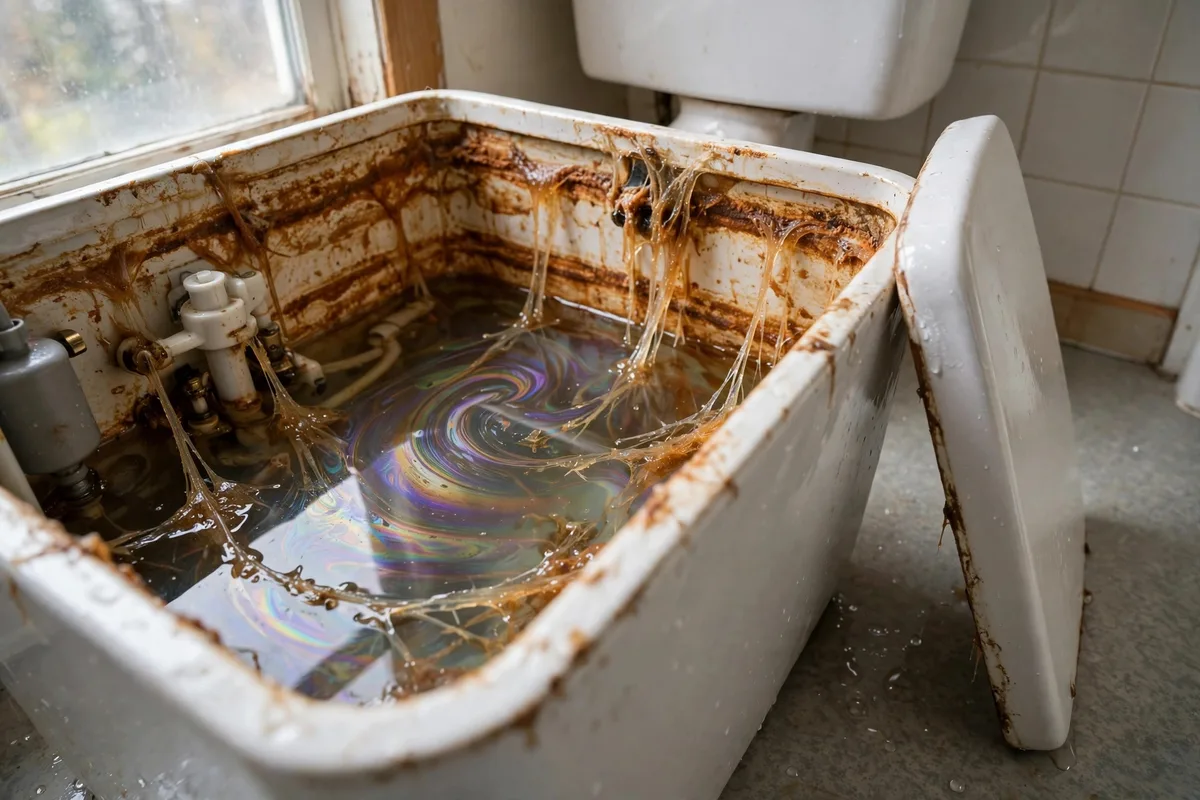
Iron Bacteria in Well Water: The Slime in Your Toilet Tank, and Why a Filter Can't Fix It
Orange slime in the toilet tank, a rainbow sheen, a swampy smell after the house sits empty. Iron bacteria live in the well itself — why no filter can fix them, and the disinfection order that controls them.
Read the guide →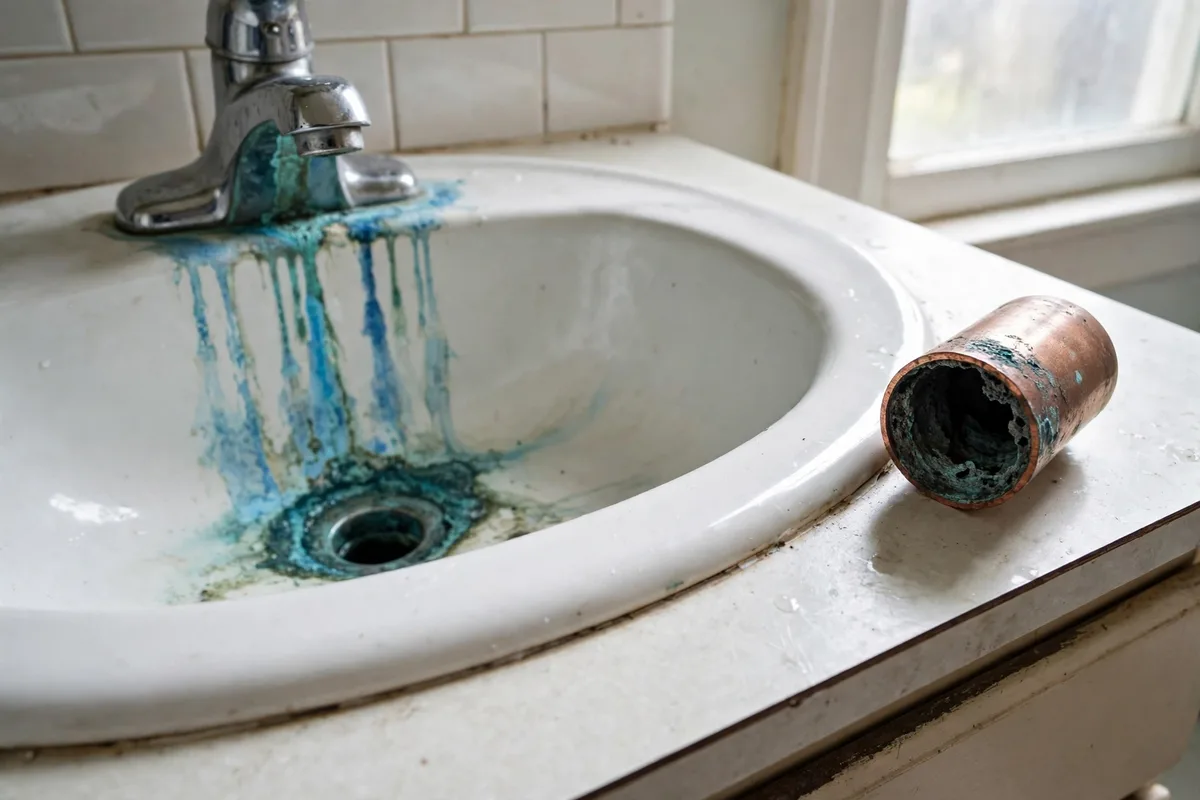
Low pH & Corrosion
Low pH in Well Water: Blue-Green Stains, Pinhole Leaks, and Why Your Filter Is Struggling
Blue-green stains, metallic morning water, pinhole leaks — acidic water eats copper plumbing from the inside, and quietly disables iron and manganese filters. Why pH is fixed first, and the two ways to raise it.
Read the guide →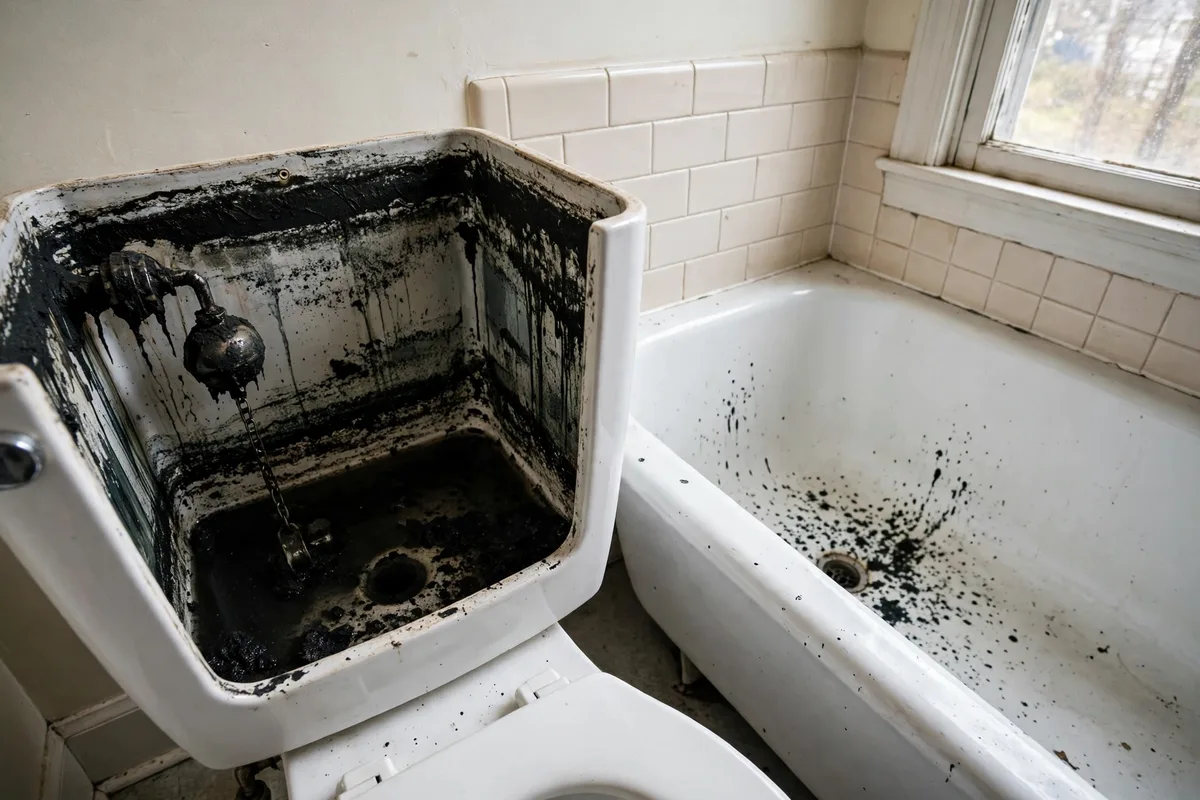
Manganese & Black Stains
Manganese in Well Water: Black Stains, Bitter Water, and Why Iron Filters Miss It
Black stains, black grit in the toilet tank, bitter coffee — manganese is iron's slower companion, and it slips past iron filters. The two numbers (0.05 and 0.3 mg/L) and the treatment each level needs.
Read the guide →