
Low pH in Well Water: Blue-Green Stains, Pinhole Leaks, and Why Your Filter Is Struggling
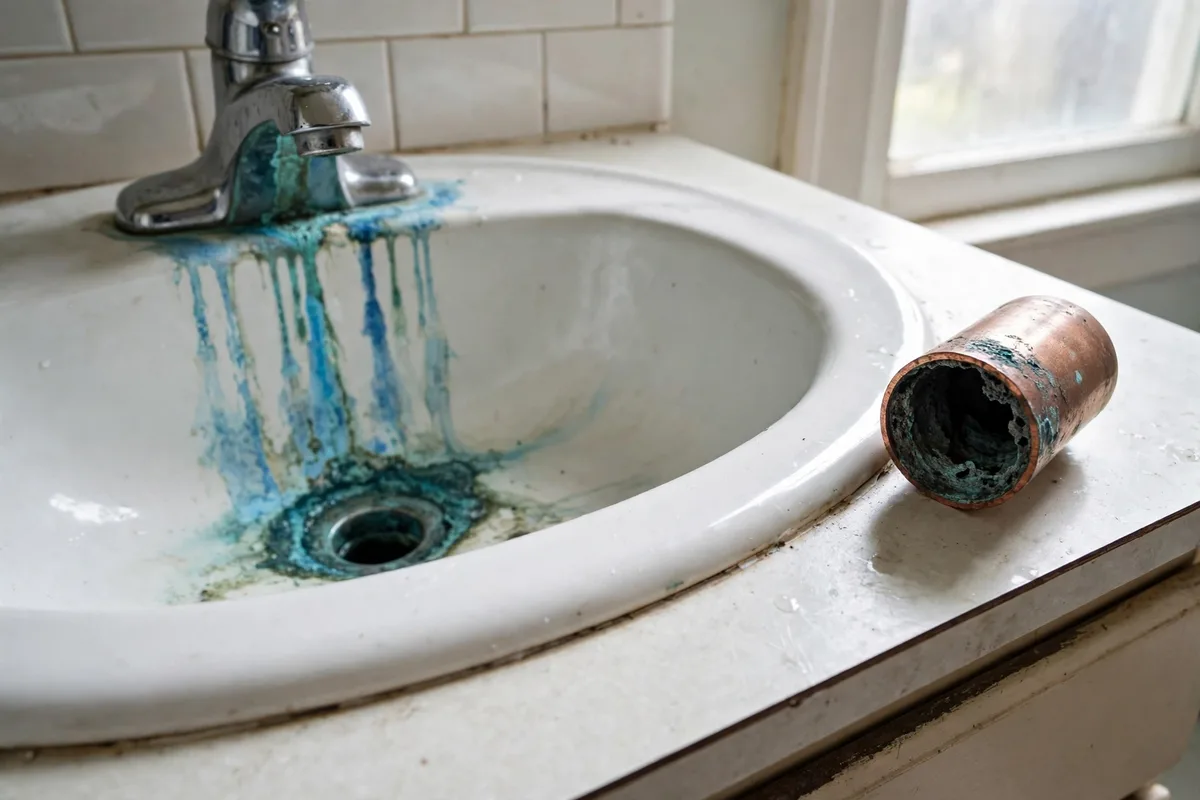
The third pinhole leak was not bad luck
The plumber cut out the leaking section of copper pipe, held it up to the light, and showed you the inside: pitted, thinned, eaten away. It was the third pinhole in two years, each in a different part of the house. The sinks had blue-green stains under every faucet that no cleaner quite removed. The first glass of water in the morning tasted like a coin.
Three separate annoyances, one cause. Your well water is acidic, and it has been dissolving your plumbing, slowly and from the inside, for years. The stains are copper that used to be pipe. The morning taste is metal the water picked up overnight. The pinholes are where the pipe wall finally lost.
Low pH is the quietest problem in this series — no orange, no rotten eggs, nothing to see in the water itself — and it is also the one that sabotages the others. Iron and manganese treatment depends on chemistry that acidic water slows to a crawl, so a low-pH well can make a good filter look broken. This guide covers what pH actually measures, the three signs of corrosive water, the damage that matters most, and the fix — which, like everything on this site, starts with the test and happens in a strict order.
What pH measures, in one paragraph
pH is a 0–14 scale of acidity: 7 is neutral, below 7 is acidic, above it is alkaline. The scale is logarithmic, so each whole step is a tenfold change — water at pH 5.5 is ten times more acidic than water at 6.5, not slightly more. Well water turns acidic innocently enough: rainwater absorbs carbon dioxide on its way through soil and decaying plant matter, and where the bedrock holds little limestone to neutralize it, the water arrives at the house still acidic.
The US Environmental Protection Agency's secondary standard puts drinking water between pH 6.5 and 8.5. Like the other secondary standards, it is a non-enforceable guideline rather than a safety limit, and the EPA lists the effects below the range as a bitter metallic taste and corrosion — and above it, a slippery feel, a soda taste, and deposits. Notice what the low end attacks: not the drinker, in the first instance, but the plumbing. That distinction runs the whole article.
The three signs of corrosive water
Penn State Extension's list of symptoms for corrosive water is short enough to check in one walk through the house:
- Bluish-green stains in sinks and tubs, under faucets and around drains. That color is copper — your pipes' copper — dissolved by the water and left behind where drips dry.
- A metallic taste, especially in the first water of the morning. Water that sits in the pipes overnight has hours to dissolve metal; the first draw carries the night's collection. Water drawn later in the day, after the pipes have been flushed by use, tastes cleaner — which is why the problem hides.
- Small leaks in metal plumbing. Pinholes, weeping joints, fittings that fail one after another. Corrosion rarely eats a pipe evenly; it concentrates at points, and those points become holes.
Penn State adds the combination to fear: water that is soft and acidic (below pH 7.0) tends to be the most corrosive, because hardness minerals and alkalinity are part of what normally buffers water against attacking metal. A soft, acidic well is not a milder version of the problem. It is the aggressive version.
How common is this? In Pennsylvania, Penn State Extension estimates that about 60% of the wells, springs, and cisterns serving individual homes have corrosive water. Your geology will differ, but acidic groundwater is an ordinary finding anywhere the bedrock is not limestone.
The quiet damage: copper, then lead
Copper in the water is mostly a nuisance with a bill attached: stains, taste, and a plumbing system being consumed on the installment plan. Every year of corrosion is pipe wall you do not get back, and the repair pattern — a pinhole here, a fitting there — costs more across a decade than the correction would have.
Lead is the more serious passenger, and it deserves a plain statement rather than a scare. Corrosive water can dissolve lead from the solder that joins copper pipes — lead was a common component of plumbing solder until it was banned in 1991 — and occasionally from lead pipes themselves or brass fixtures. Penn State's warning is the one to act on: lead is harmful at concentrations that can only be detected by water testing. You cannot see it, taste it, or stain-watch your way to knowing. In Penn State's survey of Pennsylvania private water systems, about 20% contained dangerous amounts of dissolved lead.
So the rule for an older house on acidic water is simple: if your home was built before 1991 and has copper plumbing with soldered joints, a low pH result is not complete until it is paired with a first-draw lead and copper test — a sample of the water that sat in your pipes overnight, which is exactly the water that shows what the plumbing is adding. The full panel and how to read it are in the water test guide.
Why low pH breaks iron and manganese filters
Here is the connection most equipment shopping misses. Removing iron and manganese means oxidizing them — converting dissolved metal into particles a filter can trap. That chemistry is pH-sensitive, and it slows down as water turns acidic. Penn State Extension's figures for one common media make it concrete: Birm-type filters need a pH of at least 6.8 to remove iron, and 7.5 to remove manganese. Manufacturers publish the same kind of window for whole systems — the SpringWell unit in our comparison, for example, is specified for water between pH 6.5 and 10.
Now picture the common purchase: a well at pH 6.1 with iron at 3 mg/L gets a well-reviewed iron filter, correctly sized for the iron. The filter underperforms from the first week. Stains persist, the owner concludes the brand was junk, and buys a bigger one — which fails the same way, for the same invisible reason. Nothing was wrong with either filter. The water was outside the chemistry's operating range, and nobody corrected the first number on the report.
That is why, in the treatment order used across this site, pH correction comes before the iron and manganese step — and why the manganese guide keeps repeating that manganese, the slower metal, suffers first and worst in acidic water. Read pH early, fix pH first. The rest of the equipment finally gets to do the job it was rated for.
The numbers to test
- pH itself, from a certified lab. Follow the lab's sampling instructions exactly: pH drifts as dissolved carbon dioxide escapes from a sample, so a casually drawn sample can read friendlier than the water in your pipes.
- Alkalinity and hardness, because they describe the water's buffering — how much neutralizing the water will "consume," and whether the soft-and-acidic combination is in play. Soft, low-alkalinity water at pH 6.4 can out-corrode harder water at the same pH.
- First-draw copper and lead, if the house has metal plumbing — non-negotiable in a pre-1991 house with soldered copper, worthwhile in any house showing blue-green stains.
- Iron and manganese, as always, because the correction order is decided by the whole panel, not by the loudest symptom: the iron guide covers what those numbers set in motion.
Raising the pH: the two ways
A calcite neutralizing filter — the standard fix. A tank of crushed calcium carbonate (calcite — essentially limestone or marble chips) sits after the pressure tank, and the water dissolves a little of it on every pass, lifting the pH toward neutral. No chemicals, no power for the basic models, nothing to program. Three honest trade-offs:
- The media is sacrificial. It dissolves as it works, so the tank must be opened and topped up periodically. How fast depends on how acidic the water is and how much the house uses.
- It adds hardness. The calcium that neutralizes the acid stays in the water. A calcite filter can hand you a mild hard-water problem downstream — which is why the neutralizer goes before a softener in the treatment order, and why the softener decision is made after the pH is fixed, not before.
- It has a floor. Virginia Tech Extension puts the practical limit of a neutralizing filter at about pH 5.3. Blends that mix calcite with magnesium oxide lift harder and reach lower, but they are less forgiving — an oversized blend can push pH too high and cement the media bed. Below the floor, the answer changes technology.
A soda ash feed — for the lowest pH, or when hardness is not welcome. A small pump injects a soda ash (sodium carbonate) solution into the line ahead of the pressure tank. It raises pH without adding hardness and without the pressure drop of a media tank, and the dose can be dialed to the water. The costs are upkeep — a solution tank to keep mixed and filled, a pump to maintain — and precision: chemical feed is sized and set against your actual numbers, which makes it professional work at the low end. Penn State notes soda ash is preferred over sodium hydroxide for these systems because it is safer to handle.
Above the range has its own failure mode, and it is worth naming because overshooting is a real way to "fix" pH badly: push water too alkaline and you trade corrosion for scale, a slippery feel, and a soda taste — the EPA's listed effects above 8.5. The target is the middle of the range, not the top of it.
Three mistakes to avoid
Replacing the "failed" iron filter. If the stains survived a correctly sized filter, check the pH before blaming the box. On acidic water, the filter was never given working chemistry; the replacement will inherit the same water and the same verdict.
Patching pinholes one at a time, forever. A pinhole is a symptom with a puddle. Repairing each leak while the water keeps eating the pipe is a subscription, not a solution — and every year of delay is also another year of copper (and, in older plumbing, possibly lead) in the drinking water.
Softening first. It feels productive — softeners are familiar, and they do change the water — but a softener does not raise pH, and on acidic water it removes the calcium that was providing what little buffering the water had. Neutralize first; soften after, if the corrected water still needs it.
When to call a professional
Bring in a licensed plumber or water treatment professional when: leaks are active or recurring (the pipe wall, not the pH, is now the emergency); a first-draw test shows lead — correcting the pH is the long-term fix, and a professional should size it and verify with a follow-up test; your pH is at or below the low-5 range, where chemical feed replaces a simple tank and dosing errors have consequences; or the house is pre-1991 with soldered copper and has never had a lead test. That test, like every decision in this guide, is cheap next to the alternative.
The IronInMyWater rule
Test first, treat second — and never choose equipment from one number alone. Iron, pH, manganese, and hardness together decide the system; the manufacturer's published ratings, checked against your test, decide the model. How we work
FAQ
Is acidic well water safe to drink? The acidity itself is classed by the EPA as a nuisance — taste and corrosion — rather than a health standard. The genuine risk is indirect: what the water dissolves out of your plumbing on its way to the glass. Copper announces itself with stains and taste. Lead does not announce itself at all, which is why a low pH result in a house with metal plumbing should be paired with a first-draw lead and copper test. The test, not the pH number alone, answers the safety question.
Why do the stains and the bad taste show up in the morning? Contact time. Water sitting in the pipes overnight has hours to dissolve copper from the walls, so the first draw carries the highest metal load of the day — the most taste, and the most copper left behind to stain the sink. It is also why a first-draw sample is the honest way to test for metals from plumbing.
Will a neutralizing filter make my water hard? A calcite filter, yes, somewhat — the calcium it dissolves into the water is hardness, by definition. How much depends on how low the starting pH is: more acid consumes more calcite. If the added hardness bothers you, the treatment order handles it — neutralizer first, softener second. A soda ash feed raises pH without adding hardness at all, at the price of more upkeep.
How often does a calcite filter need refilling? There is no universal interval, because the media is consumed in proportion to the acidity it neutralizes and the water the house uses. Very acidic water in a busy house eats calcite quickly; mild acidity sips it. The working rule is to check the level on a schedule — before it runs low, not after the stains return — and top up as needed. A tank that suddenly needs refilling far more often is itself a clue that the well's chemistry has shifted and deserves a new test.
My iron filter never worked well. Could pH be the reason? It is one of the first things to check. Iron oxidation slows sharply in acidic water, and common media carry explicit minimums — about pH 6.8 for iron removal on Birm-type media, 7.5 for manganese. If your report shows pH below your filter's published window, the filter was not failing; it was being fed water outside its specification. Correct the pH first, then judge the filter again before replacing it.
Can I fix low pH with a pitcher or a faucet filter? No — those treat the water you drink, at one tap, and do nothing about the water corroding every pipe in the house on its way there. Corrosion is a whole-house, point-of-entry problem: the correction has to happen where the water enters, before it reaches the plumbing it would otherwise eat.
Sources
The ratings, prices and guidelines in this guide were checked against these primary sources in November 2026.
The IronInMyWater rule
Test first, treat second — and never choose equipment from one number alone. Iron, pH, manganese, and hardness together decide the system; the manufacturer's published ratings, checked against your test, decide the model. How we work
Read next
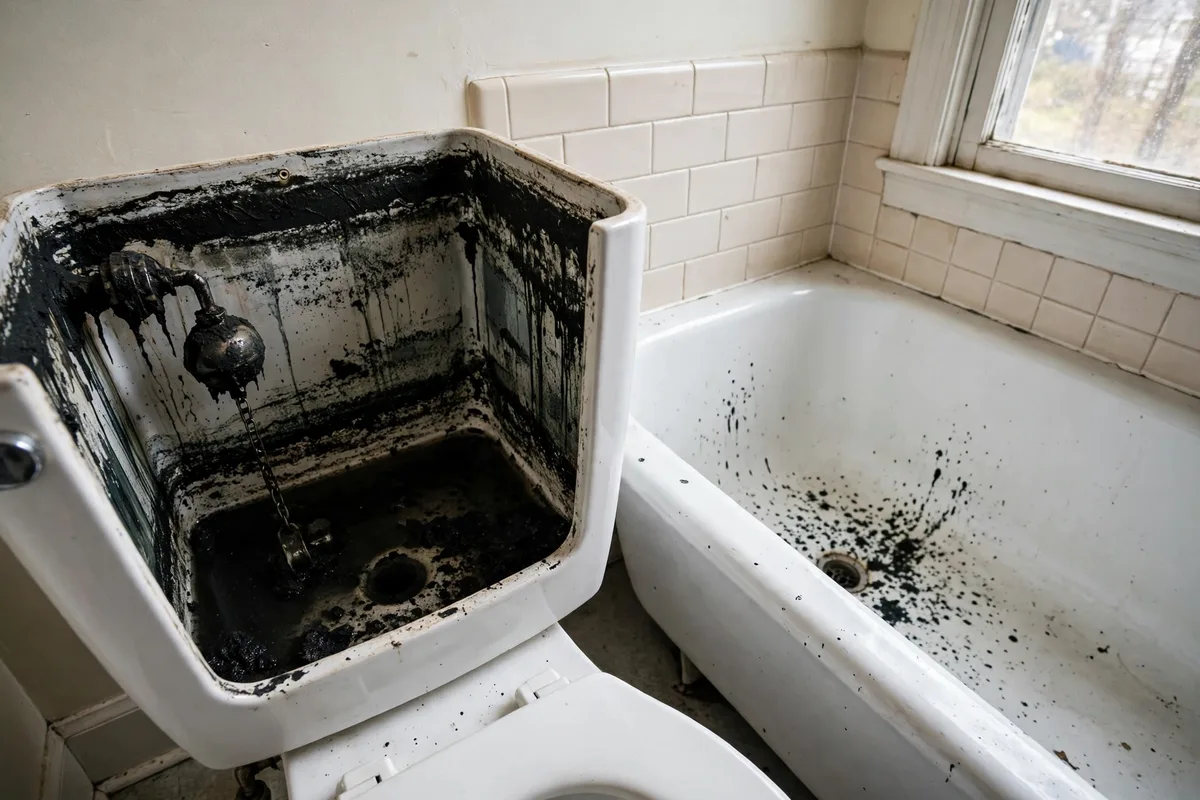
Manganese & Black Stains
Manganese in Well Water: Black Stains, Bitter Water, and Why Iron Filters Miss It
Black stains, black grit in the toilet tank, bitter coffee — manganese is iron's slower companion, and it slips past iron filters. The two numbers (0.05 and 0.3 mg/L) and the treatment each level needs.
Read the guide →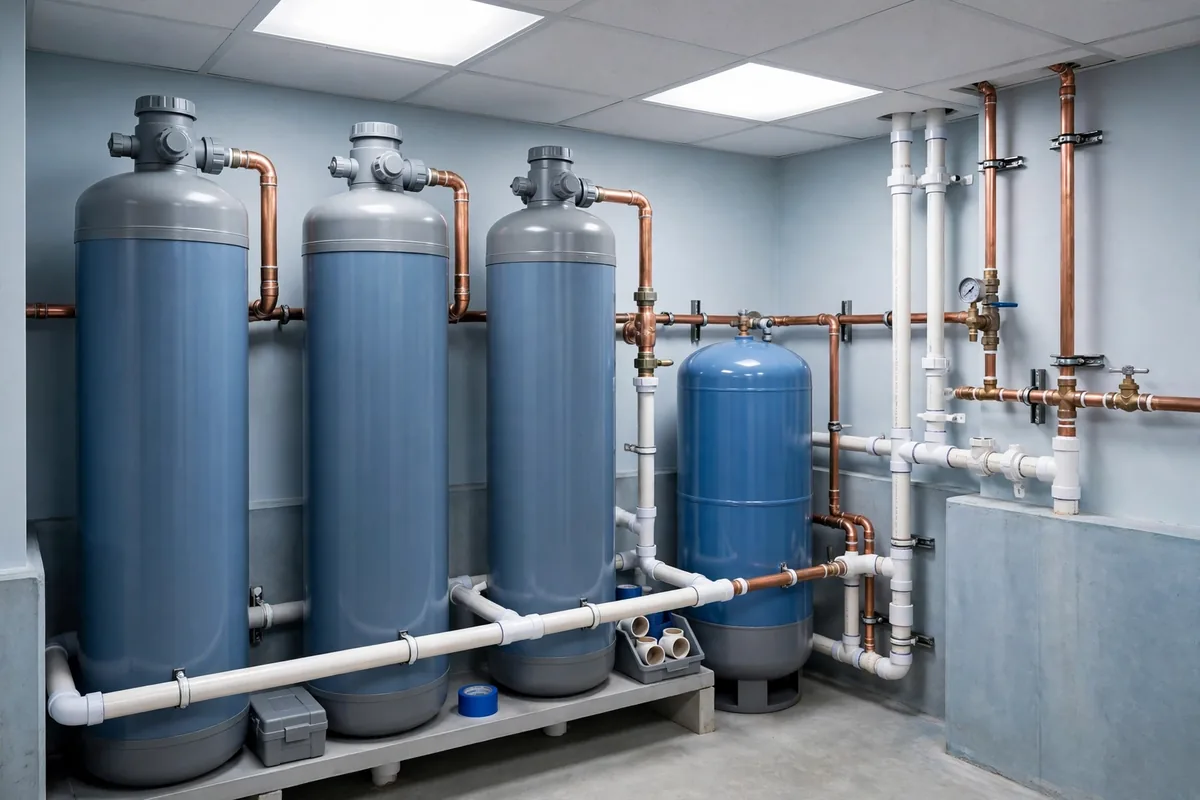
Comparisons
SpringWell vs US Water Systems vs iSpring for Well Water (2026)
$536, $2,231, or $3,295 — the price is not the ranking. SpringWell, US Water and iSpring compared on the manufacturers' own ratings, matched to your test numbers.
Read the guide →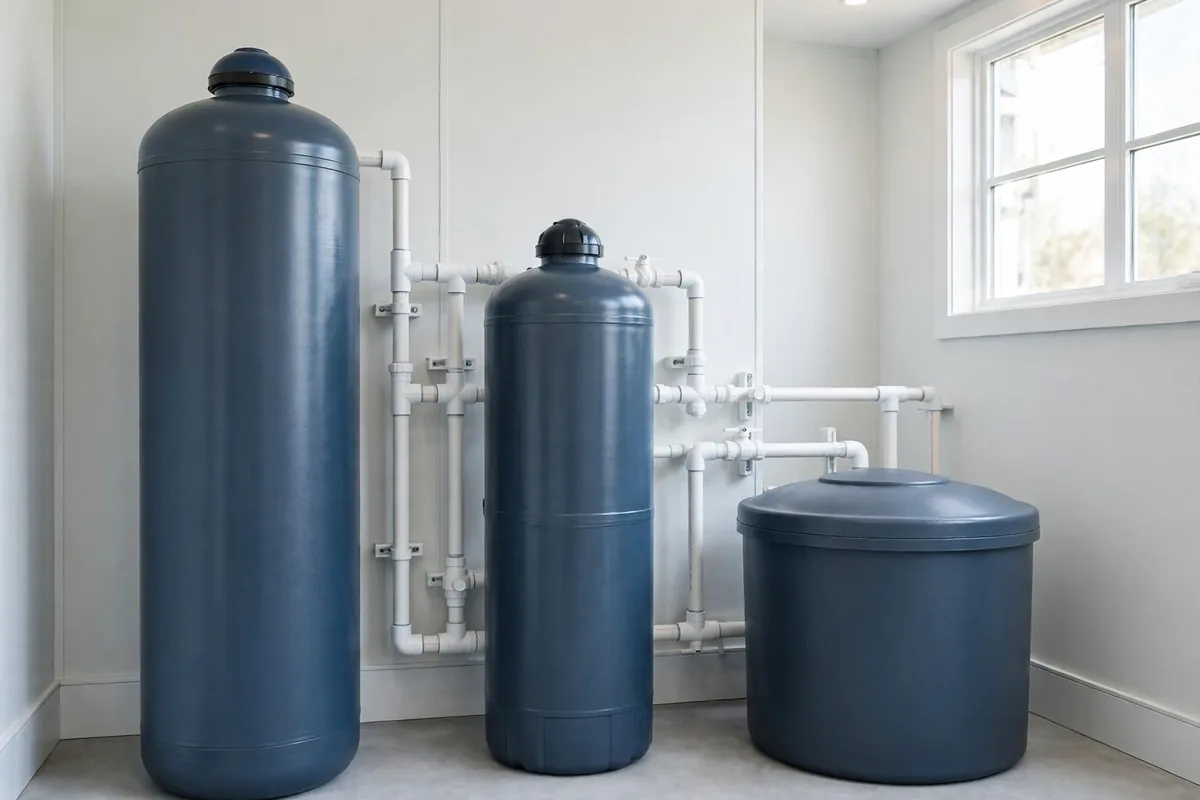
Choosing Equipment
Iron Filter vs Water Softener vs Whole-House System: Which One Do You Actually Need?
Three boxes, three different jobs — and one correct order. Why a softener will not fix iron stains, and how your test numbers pick the equipment you actually need.
Read the guide →