
Coliform in Well Water: What a Positive Test Means, and the Shock Chlorination That Fixes It
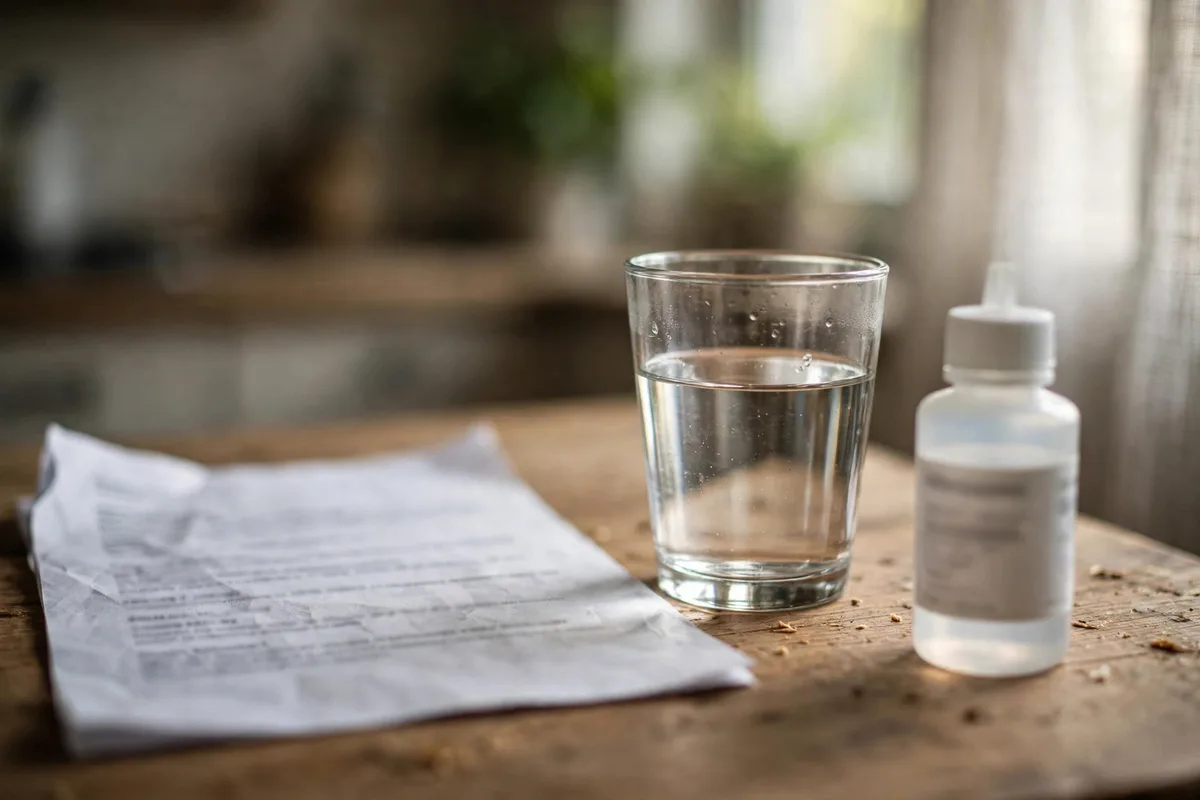
The envelope on the kitchen table
It usually arrives as an envelope, or a PDF with a table of numbers you have never had to read before. Most of the lines say "absent" or "not detected." Then one line says something else:
Total coliform: PRESENT.
Nothing about the water has changed. It looks the same, tastes the same, and yesterday you drank it without thinking. That is exactly what makes the result hard to read. So here is the short version first, and the detail after it: a positive coliform result does not mean you will get sick. It means something has found a path into your well, and disease-causing germs may be able to use the same path. Stop drinking the water, find the path, disinfect the well, and prove it worked with a retest before you drink from it again. In that order. Buying a filter first is the one move that wastes money and time, and this guide explains why.
What the three lines on your report actually mean
A bacteria report usually lists up to three results, and they are nested groups, not three separate problems. Total coliform is the widest group: bacteria that live in soil, on vegetation, and in surface water, as well as in the guts of warm-blooded animals. Fecal coliforms are a narrower group inside it, found in the intestines of people and animals. E. coli is narrower still — one specific bacterium inside the fecal coliform group.
That nesting is the whole point of the test. Total coliform is an indicator, not a diagnosis. The CDC explains that coliform bacteria typically get into water the same way disease-causing germs do — through a crack, a flooded wellhead, a failing septic system — and that they are much easier to test for. So the lab tests for the easy one and treats it as a warning about the hard ones. Most coliform bacteria are harmless on their own. A positive result does not definitely mean drinking the water will make you ill. It means disease-causing microbes may be present, and that is enough to act on.
Each result carries a different urgency:
- Total coliform: absent. No coliforms were found in the sample. This is the passing result. Keep testing at least once a year — the CDC's recommended minimum for a private well, alongside nitrates, total dissolved solids, and pH.
- Total coliform: present, E. coli: absent. A pathway for surface contamination is open. The risk is lower than with E. coli, but the well is no longer sealed against the outside world. Use other water for drinking and cooking, confirm the result, find the source, disinfect, and retest.
- E. coli or fecal coliform: present. Feces, and the germs in feces, have likely reached the well. Stop drinking the water the same day — for drinking, cooking, making formula and ice, and brushing teeth — use bottled or boiled water, and call your local health department. This is the result that turns a maintenance job into a same-day call.
One honest frame for all of this: the EPA's drinking water standards are written for public water systems. A private well is not covered by them, and nobody checks your water against them except you. The numbers in this guide — zero coliforms as the goal, the annual test — are reference points the EPA and CDC publish for well owners, not legal requirements. That does not make them optional in practice. It makes them yours to follow.
You are also not an outlier. A Penn State Extension survey of 450 private wells in Pennsylvania found coliform bacteria in about 35 percent of them, and E. coli in about 15 percent. A positive result is common. What matters is what happens next.
The first 24 hours: what to do, and what not to buy
Do this first. Switch drinking and cooking water to bottled water or water from a known-safe source. If E. coli is present, the CDC's advice is to use bottled water or boil water for drinking, cooking, and brushing teeth until a retest comes back clean. Tell everyone in the house, including guests, and put a note on the taps if children use them. Then call your local health department or county environmental health office — the same day for E. coli, the same week for total coliform alone. They test wells like yours every week, they know the local labs, and their advice is free.
Do not buy treatment yet. This is the mistake the rest of this guide exists to prevent. A UV lamp, a chlorinator, or a new filter treats the water coming out of the tap. It does nothing about the crack in the casing, the loose well cap, or the floodwater that carried the bacteria in. Install the equipment first and the bacteria keep arriving; the equipment just works harder, clogs faster, and gives you a false sense of safety. The Minnesota Department of Health puts it as a step in its disinfection procedure, not as a suggestion: inspect the well first, and fix any defects "so that surface water, insects, vermin, or other contaminants cannot enter the well." Treatment comes after the pathway is closed, never before.
Confirm the sample before you rebuild the well. False positives happen, and they have boring causes: a sample bottle that was not sterile, a tap that was not disinfected before collection, a sample that sat too warm or too long before reaching the lab. If the result surprises you — the water looks and smells fine, nothing flooded, no work was done on the well — ask the lab whether a confirmation retest makes sense, and follow their sampling instructions exactly: the sterile bottle they supply, the hold time printed on it, the tap flushed and disinfected the way they specify. A second sample that comes back absent saves you a disinfection job. A second sample that comes back present tells you the problem is real, and you have lost nothing but a few days.
Find the pathway before you disinfect
Shock chlorination kills what is living in the well right now. It does not close the door it came through. So before any bleach, walk the well and look for the door. The usual suspects, in the order a health department would check them:
- The well cap. Missing bolts, a damaged vent screen, a loose gasket, a cap that rocks when you push it. Insects and surface water get in here first.
- The casing. Cracks, or a casing that ends at or below ground level where rainwater pools around it. The top of the casing should stand above the ground, with the ground sloping away from it.
- Recent work. Drilling, a pump replacement, a repair — any time the well was opened, bacteria can ride in on equipment. Minnesota law requires a licensed well contractor to disinfect after construction or repairs, for exactly this reason.
- Flooding or heavy rain. If the wellhead was under water, or the ground around it was saturated, surface water has had a direct route in. This is also the trigger for the checklist in our guide to well water after heavy rain.
- The septic system. A failing or too-close septic system is the classic source when E. coli shows up. Distance, age, and signs of surfacing effluent are health department questions, not guesses to make alone.
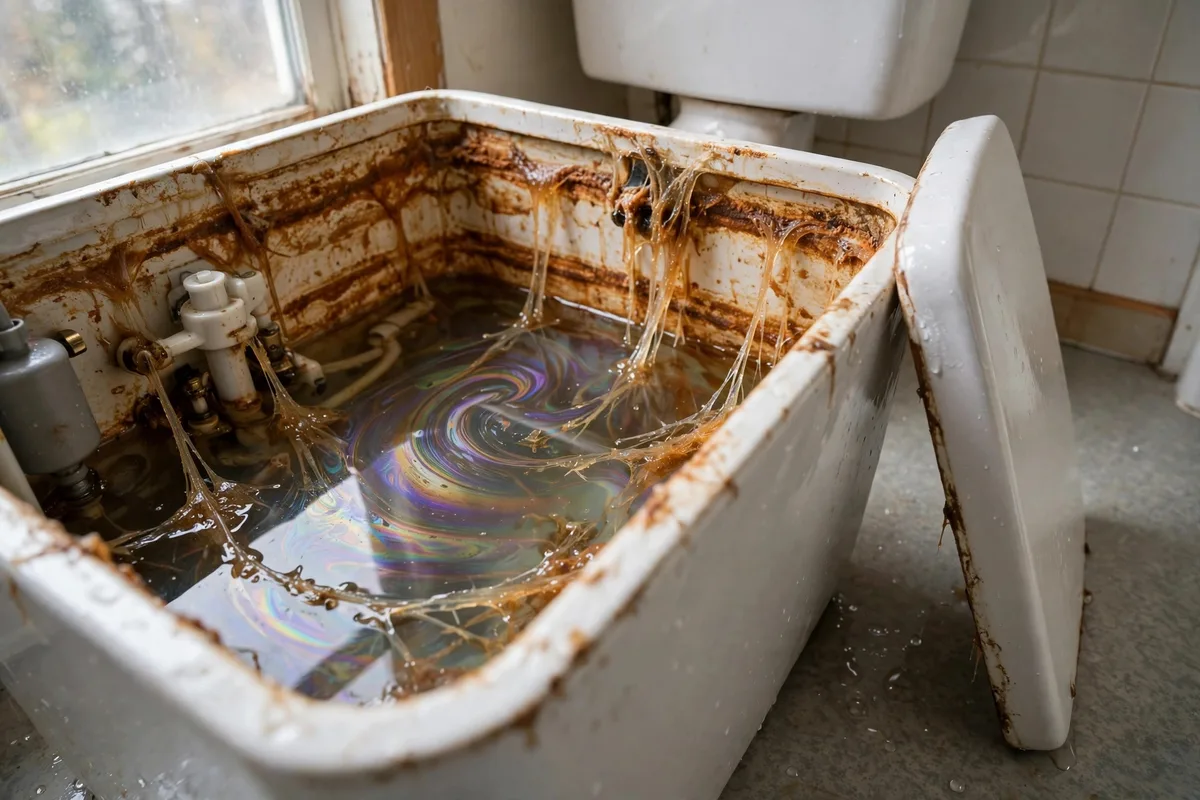
- Iron bacteria, hiding in plain sight. If the toilet tank has orange slime, or the water has a swampy smell after the house sits empty, iron bacteria may be living in the well alongside the coliforms. They are not known to cause disease, but the slime they build shields other bacteria from chlorine — which is why our iron bacteria guide insists on disinfecting the well before any filter, and why a coliform problem with slime in the tank may need more than one round of disinfection.
Fix what you find, or have a licensed well contractor fix it. Then disinfect. In that order, every time.
Shock chlorination, the Minnesota way
There are several official procedures, and their numbers differ — Minnesota aims for 50 to 200 parts per million of chlorine, other states for 100 to 150, and retest timing runs from days to weeks. Pick one procedure, ideally your own state's, and follow it start to finish. Mixing a bleach amount from one agency with a contact time from another is nobody's procedure. What follows is the Minnesota Department of Health procedure, because it is the most completely documented one, and because its numbers are the ones this site uses elsewhere. If your state publishes its own, use that instead.
The target number: 50 to 200 ppm, and never above 200. This is the detail that surprises people. More bleach is not stronger disinfection. The Minnesota Department of Health states plainly: do not use a bleach solution greater than 200 ppm, "as it will reduce the disinfection effectiveness." Aim for the middle of the range and verify it with test strips rather than guessing from the jug.
What to use. Unopened, unscented household chlorine bleach with no additives, manufactured within six months of use — the label will say the active ingredient is 6 or 8.25 percent sodium hypochlorite. Do not use swimming pool or hot tub disinfectants; they typically contain algicides and fungicides. Do not mix bleach with other chemicals, especially acids: they can form harmful gases.
How much. The amount depends on the feet of water in the well (total depth minus the static water level) and the casing diameter. Minnesota's table gives, for example, 4 cups of bleach for 100 feet of water in a 6-inch casing, and 2 cups for the same depth in a 2-inch casing. If the amount of water in the well is unknown, use the total depth instead. Mix the bleach into a clean 5-gallon pail about three-fourths full of water first; never pour undiluted bleach straight down the well onto the cap components and wires, which it corrodes.
The sequence, in brief. First, bypass every water treatment device — softeners, reverse osmosis, filters — and remove the filters; bleach damages them, and they can harbor organisms that need separate disinfection. Turn off the pump breaker, verify with a voltmeter that the power is truly off, and inspect the cap, casing, and wiring. Pour the mixed solution in through a funnel. Turn the pump back on and recirculate with a garden hose until you smell bleach at the hose, then keep recirculating for about 30 minutes, checking with chlorine test strips that the water is at least 50 ppm. Then run the chlorinated water to every faucet and fixture in the house — hot first, then cold, at least 50 ppm at each — including showers, tubs, toilets, and outside hydrants. Turn the pump off, post signs so nobody uses the water, and let the solution sit for a minimum of two hours, preferably six hours, or overnight.
Flushing. The next day, flush the chlorinated water out through an outside faucet onto ground that drains away from the septic system, landscaping, and any water bodies — bleach solution harms all three. Flushing can take 30 minutes to 24 hours or more. Verify with a chlorine test strip that reads down to 0 ppm that no bleach remains, then flush every interior faucet as well, and run the water heater through. Do not discharge chlorinated water into the septic system.
The electrical warning, kept whole. Minnesota's procedure opens its safety section with one line worth quoting: "Together, water and electricity can be deadly." Part of the procedure switches the pump back on while the well is still open. If you are not confident working around electricity, the department's own instruction is to hire a licensed well contractor. That is not a disclaimer; it is the procedure.
The retest is the treatment's proof
Disinfection without a follow-up test is a guess, and the procedure treats it that way. After the bleach is fully flushed out, have the water tested again — Minnesota recommends an accredited laboratory — and do not use the water for drinking or cooking until the result comes back negative for total coliform. Replace the filters on your treatment devices only after the lab confirms the system is total coliform free.
Then test once more. Total coliform can regrow in the system, so Minnesota recommends retesting between two to four weeks after disinfection. If coliform is detected again, repeat the disinfection procedure. It is not unusual to disinfect a water system multiple times to eliminate total coliform that has been growing in it for an extended period. If repeated attempts fail, the well itself may need cleaning as well as disinfecting — a job for a licensed well contractor, not a stronger batch of bleach.
If the bacteria keep returning after the pathway is fixed and the well has been disinfected more than once, the problem has changed shape: it is no longer a one-time contamination event but a recurring one. That is the point where continuous disinfection — a UV system or a chlorinator, sized from your test numbers and maintained on a schedule — becomes the honest answer, along with a professional look at the well itself. Penn State Extension makes the same distinction: shock chlorination is the fix for one-time contamination, and a well whose bacteria keep returning needs a continuous disinfection system. Do not buy that system for a one-time event, and do not keep shocking a well that needs one.
What a clean result buys you
A negative retest, confirmed by a second clean result a few weeks later, buys you the only thing a lab result can buy: the knowledge that the pathway is closed and the well is clean right now. It does not buy a guarantee. Wells are tested annually for exactly this reason — the CDC's floor is one coliform test a year, plus nitrates, total dissolved solids, and pH, and again after any flooding, repair, or work on the well. Put the test on the calendar the way you would an oil change: the same month every year, the same lab, the same sterile bottle. The cheapest test on the report is also the one that detects a physical defect in the well rather than a slow chemical process, and a positive result carries the most immediate risk. That is why it is first on the report, and why it deserves a first-place response: stop drinking, find the door, disinfect, and prove it worked.
The IronInMyWater rule
Test first, treat second — and never choose equipment from one number alone. Iron, pH, manganese, and hardness together decide the system; the manufacturer's published ratings, checked against your test, decide the model. How we work
FAQ
The water looks and smells fine. Can a positive coliform result be wrong?
It can. A non-sterile bottle, an unflushed tap, or a sample that waited too long can all produce a positive result from a clean well. Confirm it with a second sample taken exactly the way the lab instructs before you disinfect.
Total coliform is present but E. coli is absent. Is the water safe?
Not for drinking and cooking, not yet. Most coliforms are harmless, but a positive result means a pathway is open and disease-causing germs may be present. Use other water, find the pathway, disinfect, and retest.
Can I just install a UV light instead of shock chlorinating?
Not as the first step. UV treats water passing through it; it does nothing about bacteria living in the well or the crack that let them in. Disinfect the well first, fix the pathway, and confirm a clean retest. If bacteria keep returning after that, a continuous system such as UV is the right conversation — sized from your test numbers, not bought in a panic.
How much bleach do I need?
Follow your state's table for your well's water depth and casing diameter. Minnesota's table, for example, calls for 4 cups of unscented household bleach for 100 feet of water in a 6-inch casing, aiming for 50 to 200 ppm in the recirculating water — never above 200 ppm, which reduces effectiveness. Verify with chlorine test strips.
The retest came back positive again. What now?
Repeat the disinfection, and retest again in two to four weeks. Minnesota notes that multiple rounds are not unusual when coliform has been growing in the system. If repeated disinfection fails, have a licensed well contractor clean the well as well as disinfect it, and ask about continuous disinfection.
Sources
The ratings, prices and guidelines in this guide were checked against these primary sources in November 2026.
The IronInMyWater rule
Test first, treat second — and never choose equipment from one number alone. Iron, pH, manganese, and hardness together decide the system; the manufacturer's published ratings, checked against your test, decide the model. How we work
Read next
Bacteria & Disinfection
Iron Bacteria in Well Water: The Slime in Your Toilet Tank, and Why a Filter Can't Fix It
Orange slime in the toilet tank, a rainbow sheen, a swampy smell after the house sits empty. Iron bacteria live in the well itself — why no filter can fix them, and the disinfection order that controls them.
Read the guide →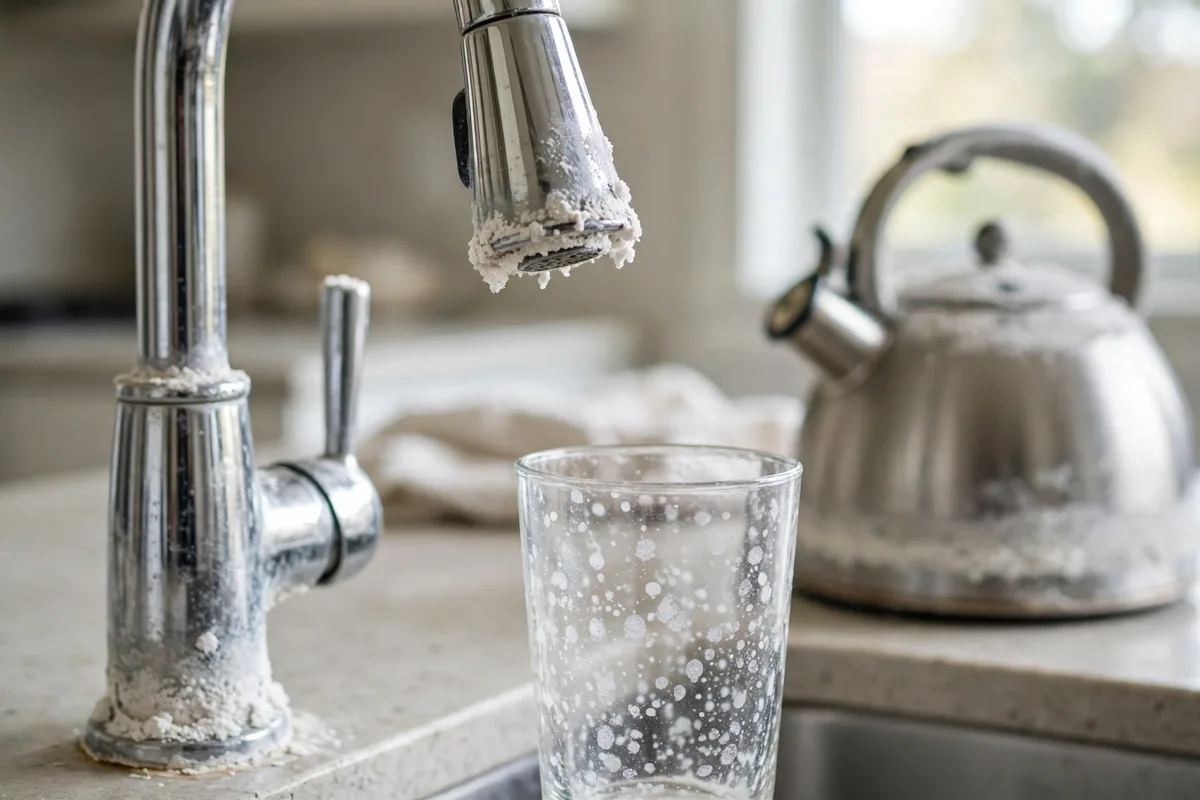
Hard Water & Scale
Hard Water in Well Water: White Scale, Spotty Dishes, and How to Soften It
White scale on the faucets, spots on every glass, a water heater slowly cooking itself in its own minerals. What your hardness number means, how a softener actually works, and why it goes last in the train.
Read the guide →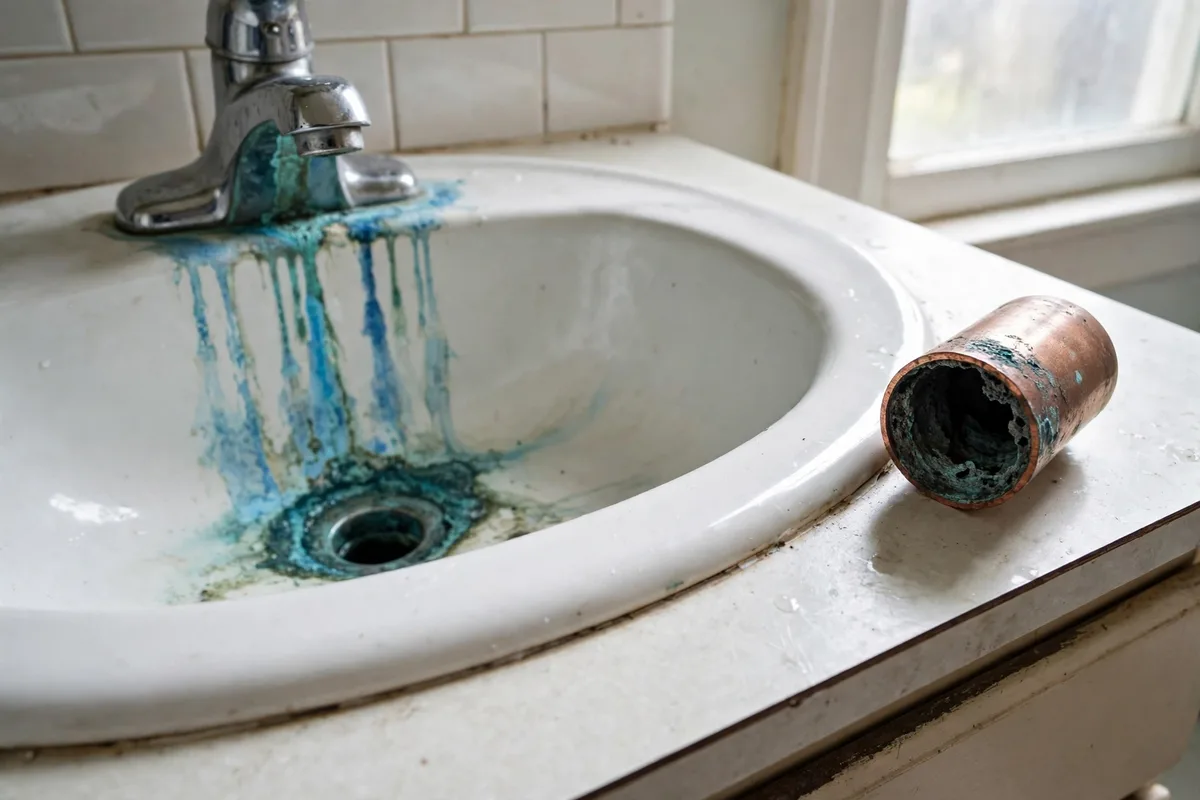
Low pH & Corrosion
Low pH in Well Water: Blue-Green Stains, Pinhole Leaks, and Why Your Filter Is Struggling
Blue-green stains, metallic morning water, pinhole leaks — acidic water eats copper plumbing from the inside, and quietly disables iron and manganese filters. Why pH is fixed first, and the two ways to raise it.
Read the guide →